A September 2026 article in the Journal of the American Heart Association, titled ‘JAK2V617F Mutation in Ischemic Stroke: Bridging Hematology and Stroke Neurology’ highlights a lesser known risk factor associated with the Jak2 mutation.
The article further emphasises the importance of neurologists checking for the Jak2 mutation in stroke patients. Specifically, the article concludes:
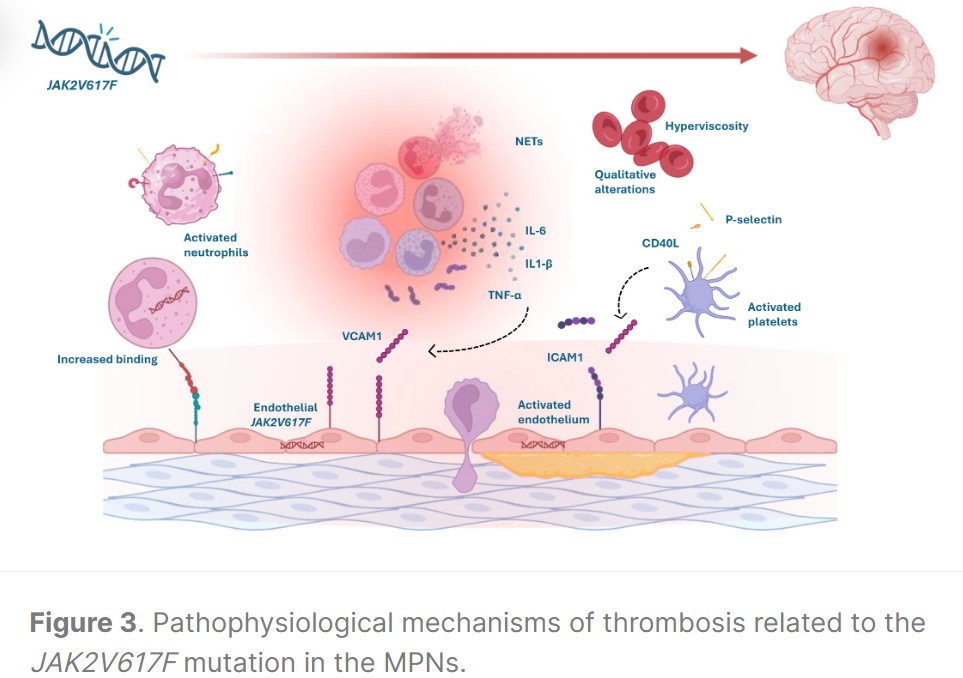
“Thus, detecting CHIP-JAK2V617F in patients with stroke is relevant for 2 key reasons. First, it enables proactive monitoring for potential development of MPNs, allowing for early diagnosis and timely intervention. Second, it opens for more targeted secondary prevention in patients with ischemic stroke carrying this mutation. Potential future strategies could include targeting the mutant clone, such as with pegylated interferon-a which reduces JAK2V617F VAF in MPNs, and modulating systemic inflammation, using agents such as interleukin-1ß inhibitors or colchicine, which have shown cardiovascular benefit in selected populations….”
“Furthermore, there is a critical need for refined risk stratification to identify subgroups of CHIP – JAK2V617F carriers at particularly high risk, including smokers, as suggested by our findings. Achieving this will require long-term prognostic data on patients with stroke with the JAK2V617F mutation, encompassing survival outcomes and the incidence of subsequent thrombotic events.”
“Finally, a deeper understanding of how JAK2V617F contributes to cerebrovascular disease will be essential in guiding secondary prevention strategies. Such initiatives could ideally be organized in specialized CHIP clinics, bringing together expertise from various specialties, and thus serving as interdisciplinary anchors for risk stratification and preventive medicines in individuals with CHIP – JAK2V617F.”
“Until then, we emphasize the importance of a wider use of JAK2V617F mutation analysis, to identify undiagnosed patients with MPNs or pre-MPN conditions, to enable early diagnosis and early intervention, thereby reducing their risk of thrombotic complications.”
The full article is free to access.
‘JAK2V617F Mutation in Ischemic Stroke: Bridging Hematology and Stroke Neurology’