Patients with a myeloproliferative neoplasm are managed under the care of a haematologist. However, there is also a significant role for a GP in supporting their patients with an MPN.
Published article for GPs
Myeloproliferative neoplasms: Classifications and an approach to diagnosis, Australian Journal of General Practice, 2021
Implications of delayed diagnoses
The delayed diagnosis of myeloproliferative neoplasms is common and results in a high incidence of potentially preventable thrombotic complications, Pathology, 2018
(An Australian study from NSW data).
Relevance of early diagnosis in polycythemia vera and essential thrombocythemia: A single center’s experience, Science Direct, 2022 (a Spanish single centre study)
Pathways to myeloproliferative neoplasm presentation and time to diagnosis: results from a cross-sectional study, BJGP, 2025 (a British study)
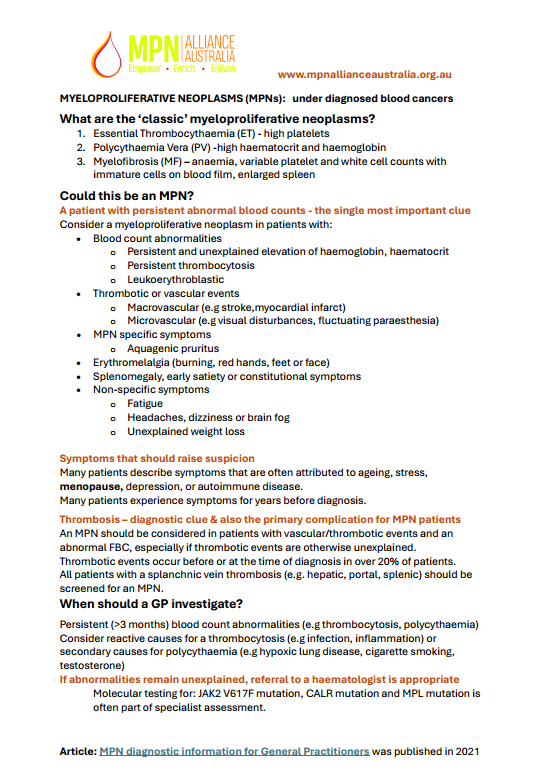
Diagnostic clues: could this be an MPN?
Handout for GPs MYELOPROLIFERATIVE NEOPLASMS June 2026 to assist GPs with diagnosis (see image below)
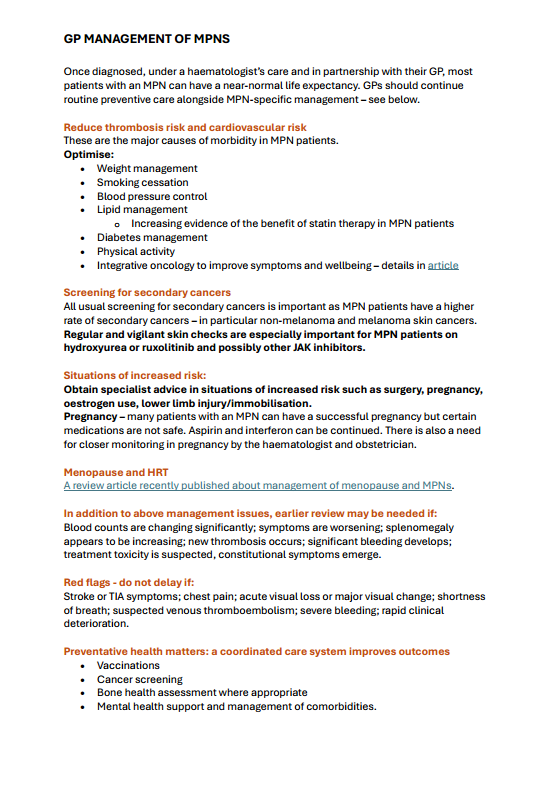
GP Management of a patient with an MPN
This same handout contains a one page overview to assist GPs with MPN management (see image below)
Reducing thrombosis risk
Thrombosis is the major cause of morbidity in MPN patients.
Polycythemia vera patients’ haematocrit needs to be kept below .45 to reduce thrombosis risk and for women, haematologists often prefer to keep haematocrit below .42.
For more information, see the MPN AA website page on:
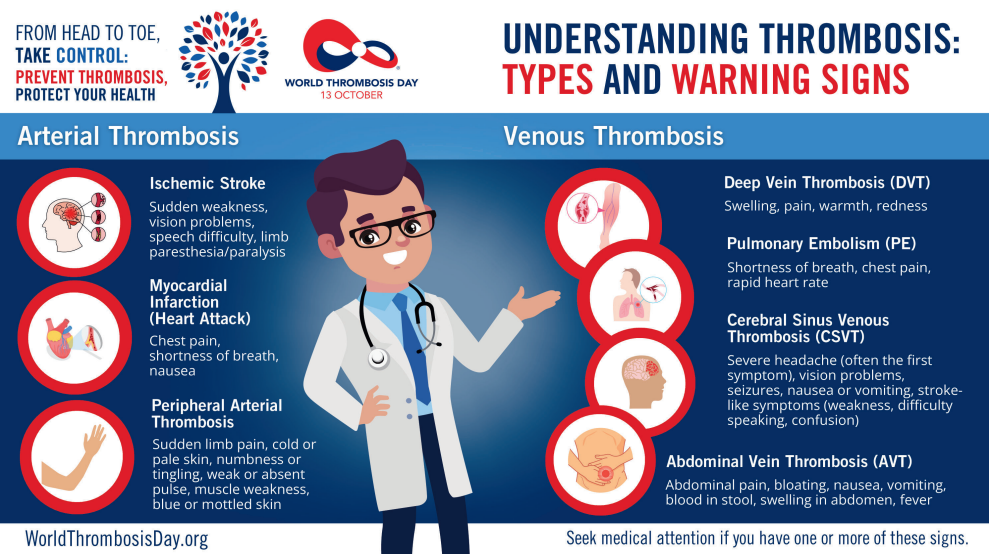
Recognising and preventing blood clots
(pictorial courtesy of Stop the Clot)
Cardiovascular issues
It is important that an MPN patient’s cardiovascular factors are well managed:
- Weight management
- Smoking cessation
- Blood pressure control
- Lipid management
- Increasing evidence of benefit of statin therapy in MPN patients
- Diabetes management
- Physical activity
Integrated oncology in MPNs
Optimizing Care: Integrative Oncology in Myeloproliferative Neoplasm, Current Oncology Reports, 2024.
The study found that by combining integrative oncology with evidence-based pharmacological treatments, the potential exists to enhance the quality of life and clinical outcomes for individuals with MPNs.
Some examples are: exercise; yoga and mindfulness; Mediterranean diet; weight management, some complementary therapies.
These findings are also consistent with the SIMM study: Survey of integrative medicine in myeloproliferative neoplasms, published in 2020.
Managing MPN symptoms
Further information about MPN symptoms and symptom management is available.